
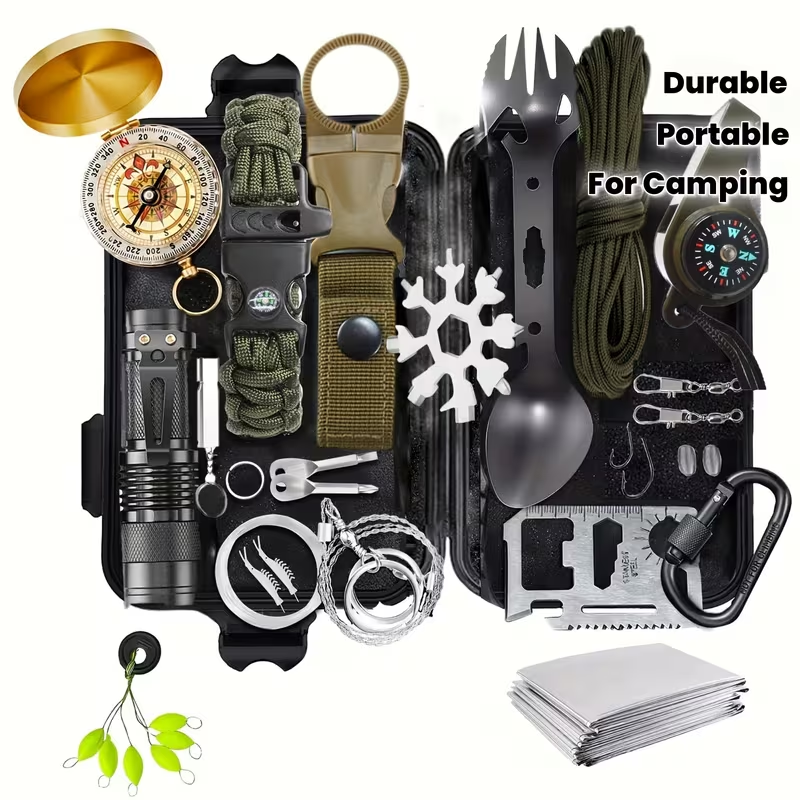

Survival kits have one strong consumer benefit: they reduce anxiety. You don’t have to be an outdoor instructor to want a simple safety net for small (but very unpleasant) everyday scenarios-your phone dies, it gets dark sooner than planned, you need to shine a light, secure something, cut a cord, signal for help, and you’ve got nothing on hand. The market answered this long ago with compact “all-in-one” sets-usually in a small, rugged case you can toss into a backpack, glove compartment, or a storage box at your cabin.
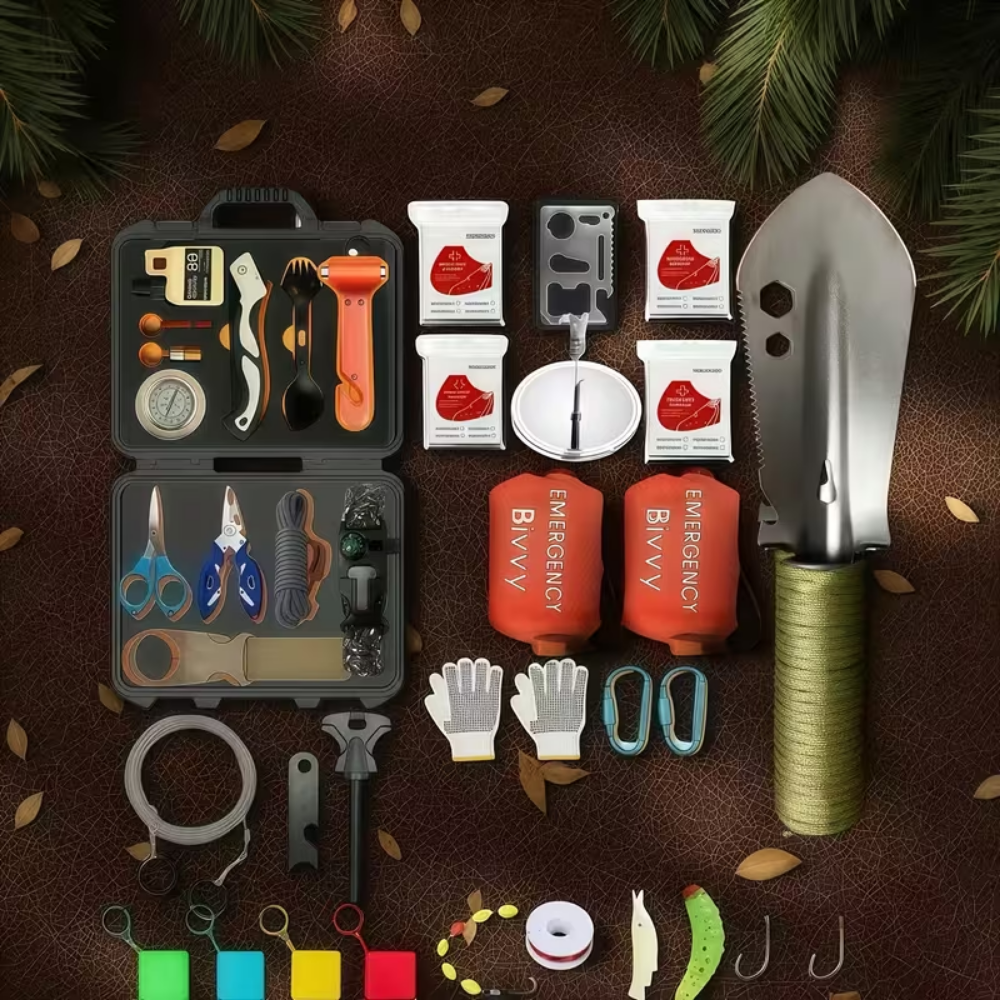
What’s inside and why it matters: the purpose of the kit, not just “14 items”
A typical “14-in-1” kit is usually built around three jobs: signaling, light, and basic utility tasks. Below is the logic behind the items most commonly included:
Whistle — the easiest way to get attention from a distance without shredding your voice.
Compass / compass built into a paracord bracelet — basic navigation when there’s no service or you’re conserving battery.
Flashlight and mini flashlight — two light sources increase reliability: one can be your “main,” the other a backup or keychain light.
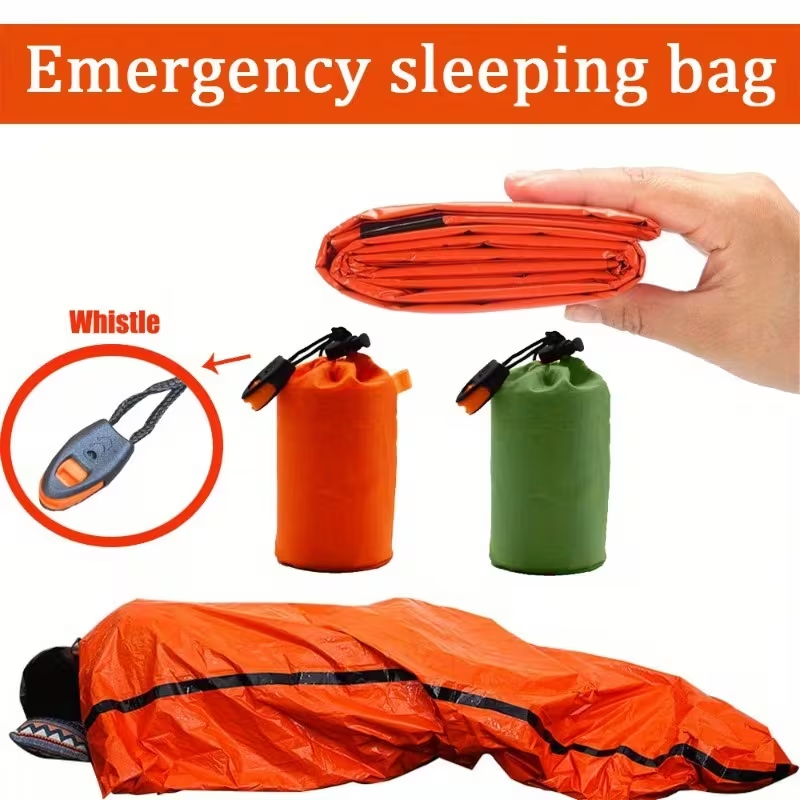
Emergency blanket (mylar) — a compact item that helps reflect heat and block wind in emergency situations (within reason).
Ferro rod (fire starter) — a tool for starting a fire if matches/lighter are wet or you’ve run out.
Wire saw — a mini tool for rough cutting of wood/branches (with the caveat that compact models have limited performance).
Multi-tool card — a “Swiss Army knife” in a flat format: usually includes cutouts/mini wrenches/openers for small tasks.
Knife / steel emergency pen / carabiners — a set for “trim/tighten/hook/clip” in typical outdoor, practical use.
Case — half the value of these kits: everything isn’t rattling around your backpack; it’s all in one box. A common form factor is around 18 × 5 × 11 cm, which is genuinely compact.
Who it’s actually useful for-and in what situations
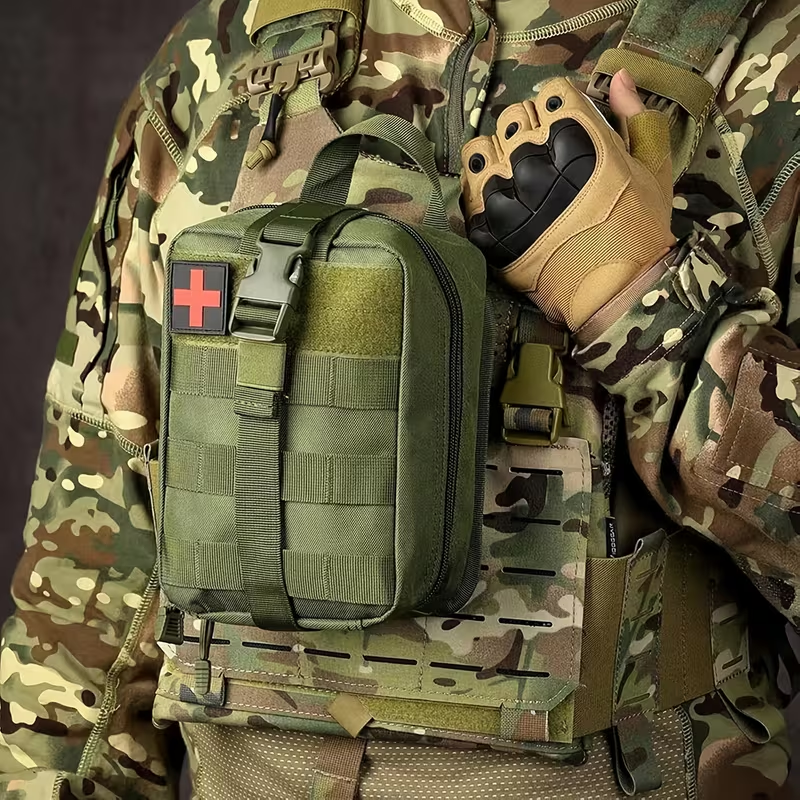
Outdoor beginners. When you don’t have much experience, it’s the small things that create discomfort: no light, nothing to fasten with, no way to signal. A compact kit works like a “safety cushion.”
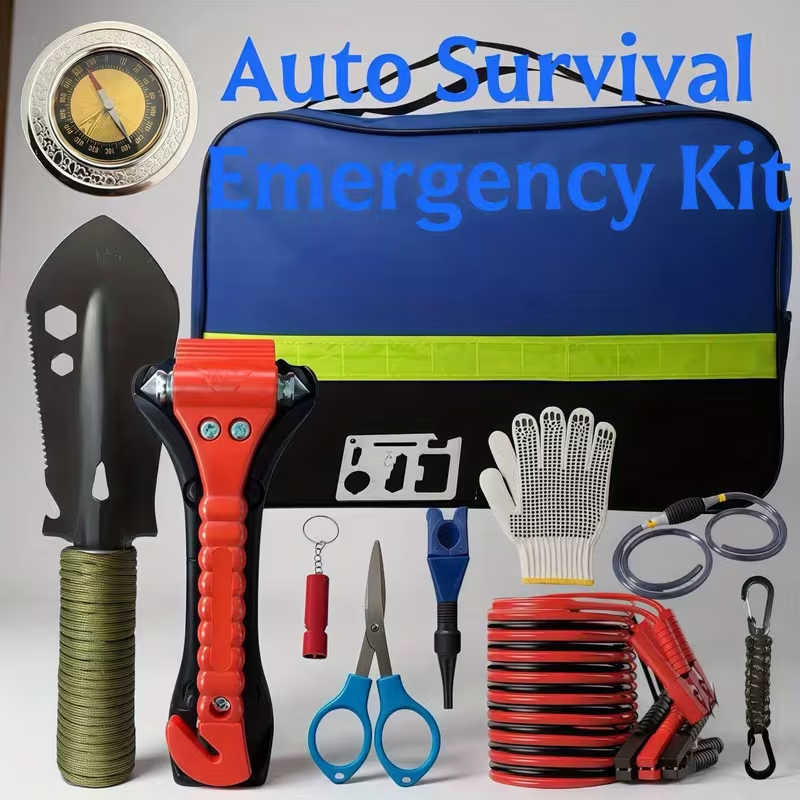
Drivers. In a car, it makes sense to keep items like these as backup: a flashlight, whistle, carabiner, something to cut with.
What’s important to understand before buying (the honest part)
This is not a professional rescue kit and not a first-aid kit. It covers basic outdoor “small essentials,” but it doesn’t replace training or specialized gear.
Budget kits can be uneven in quality. In these sets, some items will feel “really solid,” and others will be more “just in case.” That’s normal for the format.
Check carry/transport rules. If the kit includes a knife, different countries and situations (for example, air travel) may have restrictions.
This is not a professional rescue kit and not a first-aid kit. It covers basic outdoor “small essentials,” but it doesn’t replace training or specialized gear.
Budget kits can be uneven in quality. In these sets, some items will feel “really solid,” and others will be more “just in case.” That’s normal for the format.
Bottom line
If you need a compact “backup kit” for trips, your car, or your backpack, the 14-in-1 format is a clear and popular choice: a rugged case, basic signaling/light/utility tools, and everything in one place. And if you’re buying it as a gift, it’s exactly the kind of product that looks impressive while still being practical and easy to understand.
